M.C. PublishingGet it on Amazon
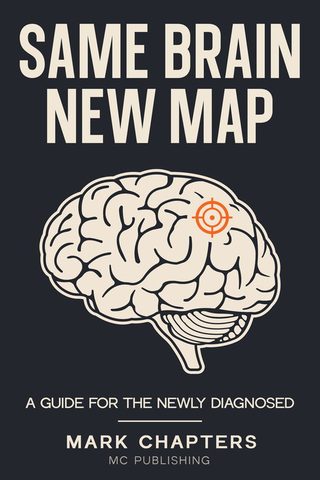
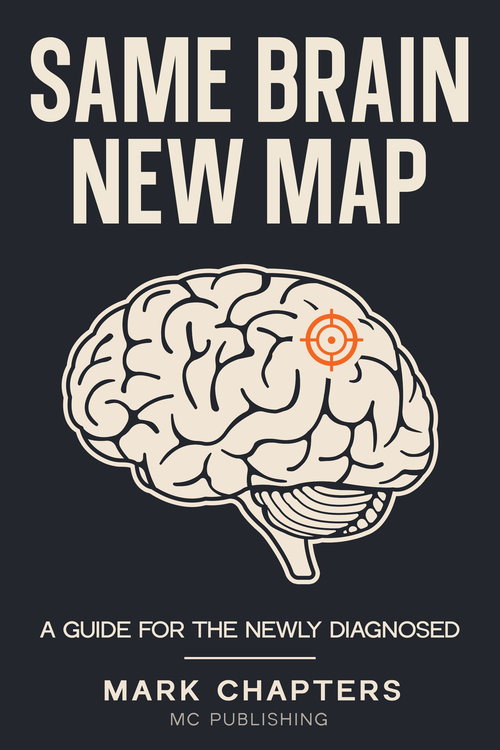
Same Brain, New Map: A Guide for the Newly Diagnosed, by Mark Chapters. A brain drawn in white on a dark cover, with one orange target on it.

The Toolkit

Same Brain, New Map

Every page in the book you were told to print, plus the things that change too fast to put in a book. Free, with nothing to sign up for.

What this is

Same Brain, New Map is the first book of the diagnosis. It asks you to write on about fifteen pages, and this is where they live, full size, with room to actually write.

They are grouped by part, so you are never handed all of them at once — which would be exactly the flood Chapter 3 tells you to sort. Take the pack that matches where you are. Ignore the rest until they are relevant, which for some of them may be never.

Every sheet reproduces its instrument from the book word for word, with the chapter printed on it. If a sheet ever differs from the chapter it came from, the book is right and the sheet is a mistake.

The Same Brain, New Map paperback lying on an unfolded map, with a pencil and an orange marker.

The sheets

Pack 1, seven sheets

The First Weeks

Everything from Part One. For the months-one-to-three reader.

Diagnosis day, the stage locator, the triage sort, the cost ledger, what was seen instead, what my report says, the reply card

DownloadPDF, 57 KB The First Weeks

Pack 2, three sheets

The Decisions

The two decisions that arrive whether or not you are ready.

The medication framework, the disclosure page, the four scripts

DownloadPDF, 43 KB The Decisions

Pack 3, three sheets

The Lost Years

The reflective sheets. The ones people fill in slowly.

The two-column ledger, the sorting page, questions for my clinician

DownloadPDF, 41 KB The Lost Years

Pack 4, two sheets

The Doors

For the not-yet-diagnosed reader, and the one who has finished.

The assessment-prep sheet, the forward page

DownloadPDF, 37 KB The Doors

On its own, one sheet

Prescriber Prep

This one goes to a clinician, so it is never bundled inside anything. Print it, fill it in, hand it over at the start of the appointment.

DownloadPDF, 28 KB Prescriber Prep

On its own, one sheet

The Ally One-Pager

The page you hand to a partner or a friend instead of explaining it yourself. Written for them, not about you, and short enough to actually get read.

DownloadPDF, 54 KB The Ally One-Pager

On its own, two sides

The Informant Briefing

For the parent or sibling asked to corroborate before an assessment. What they will be asked, and why specific questions produce an account where vague ones produce a shrug.

DownloadPDF, 49 KB The Informant Briefing

These are free and they stay free. There is no email to hand over, no account to make, and nothing on this page is a sample of something else. If you only ever print one, print the triage sort.

What changes

Some things date faster than a printed book can. Waiting times, provider lists, funding caps, guideline status — the book deliberately refuses to print those and sends you here instead. Each page carries a visible last-checked date, so you can see for yourself whether anyone has looked recently.

If things feel unsurvivable rather than difficult, please talk to someone today rather than reading anything. US: call or text 988. UK & Ireland: Samaritans 116 123. Australia: Lifeline 13 11 14. Germany: TelefonSeelsorge 0800 111 0 111. Anywhere else: findahelpline.com — and the resources page has the full list.

What readers say

One review so far. The rest are readers of Mark's other books.

5.0 out of 51 rating on Amazon

Fresh start

I feel like this author actual understands, and cares about their readers. I can't remember the last time I felt this when reading a book. I was shocked by the pages instructing you to get your finances together, because this one of the big areas that have serious immediate repercussions in your life. Yes, it is mostly about getting your mind around a new way of understanding yourself, and is full of guidance and help. Get it!

Strongly recommend

I didn’t appreciate just how burned out I was until I read this book. Not the everyday “tired” kind, but the deep, foggy, everything-is-too-much exhaustion that doesn’t go away with sleep. This workbook put words to experiences I’ve had for years and never fully understood.

What stood out to me is how practical and compassionate it is. It doesn’t try to motivate you, fix you, or push you to “try harder.” Instead, it slows everything down and meets you where you actually are. The idea of treating energy like a budget was especially helpful. It made burnout feel understandable instead of like a personal failure.

concrete and functional

This trio of books are the most concrete, actionable books on how to ‘be’ successfully as an autistic person. I found these a little late but all the things that worked…were in this trio of books, and reading gave me more tips. I started with the burnout book, and am halfway through the attachment one and just finished this one. Gloves. Music. And a list so I don’t forget anything. Read these. Put them into practice when you can, and you CAN.

Fantastic Read!!!

At long last, a book about keeping a home functional that doesn’t assume everyone’s brain works the same way. The Neuro-mechanics Guide to Home Maintenance provides practical tools, humor, and zero-shame approach make everyday tasks feel much more manageable. I especially appreciated the ideas around breaking tasks down, saving your progress, and working with your energy rather than fighting against it. If traditional organization advice has never quite worked for you, this book is absolutely worth a look. Highly recommended!

clear, readable instructions and explanations

All of these manuals are well done and helpful. It is funny to me that I recognize the best tools and relationships from my life in the exercises and examples, but I had not been able to explain previously why something was helpful or like being stabbed in the eyeballs. Read it. Step away. Come back and introduce the tools as you need or can.

This Author Gets Us!

In this book you are given the validation of being seen and heard just as you are without labels like lazy or just not trying hard enough. Rather than getting dense rectangles of text and exercises requiring essays , there are lots of bullet points and check lists.

What really resonated for me was the concept of energy credits with a long list of specific things I could do to feel more restored. I could check off boxes for handy reference to find again quickly. Some things I thought were just me being weird, like sometimes reading the same books, watching the same movies, eating the same foods, listening to the same music. I never realized how much of a comfort these things could be, and how much I was sometimes having to work to try new things when I was with other people, so they wouldn’t roll their eyes at me.

Modules mean you can go to whatever section you need right now, without feeling like you need to zoom through the book. If the term Autistic Burnout makes you internally scream “Yes, yes, that’s me, please help!” this book can help you and hopefully build a way to never feel autistic burnout again.
A great read for anyone that struggles being on the spectrum

As someone who was diagnosed with high functioning autism in my 40s, this is compassionate and genuinely practical guide for anyone experiencing autistic burnout. The Autistic Burnout Recovery System doesn’t offer unrealistic “just try harder” advice .. instead, it provides a thoughtful framework for understanding why burnout happens and how to recover without shame or self-blame.

What makes this book stand out is its focus on energy management, nervous system regulation, and life redesign rather than quick fixes. The steps feel achievable, and the tone is validating and respectful of autistic lived experience.

Very practical

I am not autistic but reading this has helped me to understand my daughter better. I haven't gotten all the way through it yet but this workbook seems to be extremely practical. With questions to help you understand yourself better, explanations of how the nervous system reacts, and ways of calming it. The book also discusses the energy debt and ways to counteract that. A very helpful resource.

Where to go next

All the books