Same Brain, New Map toolkit
Assessment Pathways
Routes, costs and waits, in the four markets the book covers. The book refuses to print these because all three change faster than a reprint.
Last checked 5 September 2026Reviewed quarterly
Same Brain, New Map deliberately doesn't print routes, costs, or waiting times, because all three change faster than a book can be reprinted. This is where they live.
Two questions decide almost everything, in every country. Ask both before you commit to a route:
- Who can diagnose me here?
- Who prescribes and monitors afterwards — and is that the same person?
The second one is where most systems fail, and people learn it too late.
United States
Who can diagnose. Psychiatrists, psychologists, and some primary-care physicians; scope varies by state and by insurer.
How people usually get there. Primary care first, then referral to a psychiatrist or psychologist. Telehealth providers have expanded enormously since 2020 and now handle a large share of adult assessments; quality varies more in this category than in any other, so it's worth asking what the assessment actually involves before booking.
The thing to check first. Whether the assessor will also prescribe and monitor, or whether you'll be handed back to primary care afterwards — and whether your primary-care physician is willing to take that on.
Guidelines. The US has never had a national clinical guideline for adult ADHD. APSARD's first set entered its final review stage before publication in August 2026 and has not yet been published as of this writing.
United Kingdom
Health is devolved, so there are four systems, not one. This matters more than most guides admit.
England
Right to Choose is an entitlement under the NHS Constitution. If your GP agrees an assessment is clinically appropriate, you can choose an approved NHS-funded provider rather than waiting for the local service. It has moved a great many people from a multi-year wait to a matter of months.
Three things it does not do:
- It does not oblige your GP to prescribe afterwards. That handover is a shared care agreement, it is separate, and it is voluntary. Practices are not contractually required to accept one, and refusals have become substantially more common since 2021 — through local medical committee advice, regional restrictions, and individual practice policies. NICE guideline NG87 sets the expectation that primary care takes on prescribing after specialist initiation; it does not create a legal obligation.
- It does not always cover titration. Many Right to Choose contracts cover the assessment only, and people report waiting a further six to twelve months to begin medication after diagnosis.
- It is not immune to local restriction. Several Integrated Care Boards introduced funding caps or booking pauses during 2026.
The single most useful thing on this page: ask your GP practice about their shared care position before you choose a provider and before the referral is submitted. One phone call. The answer determines which route makes sense.
If shared care is refused, the escalation route is a formal written request to the practice → the Integrated Care Board → NHS England → the Parliamentary and Health Service Ombudsman. It is slow, and people do use it successfully.
Scotland
Right to Choose does not exist here, and no well-worded letter changes that — the commissioning infrastructure it depends on is specific to English law. Any guide claiming otherwise is wrong.
Adult ADHD services are commissioned by the regional health boards, and there is no national waiting-time standard for ADHD assessment. The routes are a GP referral to the local NHS mental health or neurodevelopmental service, or a self-funded private assessment. Work on improving the NHS pathway is under way; a standardised national system is not yet in force.
Wales
Also outside Right to Choose. Referral runs through the Local Health Board. Some boards operate combined adult neurodevelopmental services covering ADHD and autism together, accessed by GP referral. Waits vary substantially by board.
Northern Ireland
The most distinct of the four. Adult ADHD services under Health and Social Care are underdeveloped relative to England and Scotland; in many trust areas there is no dedicated adult ADHD assessment service, and adults are directed to general adult psychiatry or self-fund. ADD-NI is the main source of peer support and current signposting.
Private, anywhere in the UK
Reported costs run roughly £600–£2,500 depending on what's included — assessment and report at the lower end, ongoing prescribing and reviews at the upper. A diagnosis from a CQC-registered private provider is clinically valid; whether your GP will take on shared care afterwards is a separate question, and the one to ask first.
Australia
Who can diagnose. Psychiatrists, psychologists, and paediatricians nationwide. Notably, trained GPs can now diagnose and treat adult ADHD in Queensland and South Australia, with reforms progressing in other states — New South Wales was scheduled to follow during 2026.
The usual route. GP first. The referral is what activates Medicare rebates on specialist appointments, so ask for it to be made specifically for adult ADHD assessment.
Costs. Reported out-of-pocket costs for a private psychiatrist assessment commonly run $600–$1,600 and upward, with Medicare rebates covering part of it. A Mental Health Treatment Plan gives rebates for psychology sessions.
Waits. Commonly reported as 4–12 months for in-person psychiatry, shorter for telehealth, and a matter of weeks via the GP pathway where it's available.
Prescribing. PBS-subsidised ADHD medication generally requires psychiatrist involvement, with GPs continuing prescriptions under shared-care arrangements where the state allows it. Rules differ by state — worth confirming locally.
Germany
Who can diagnose. Fachärzt:innen für Psychiatrie und Psychotherapie, specialised Neurolog:innen, and Psychologische Psychotherapeut:innen with relevant training. Your Hausarzt will not normally carry out the diagnosis, but can issue the Überweisung.
Routes. A referral to a specialist practice; a Psychiatrische Institutsambulanz (PIA) or a university Hochschulambulanz; or a specialised adult ADHD clinic.
Cost. Diagnostics are in principle a Kassenleistung — covered by statutory insurance where the practice holds a Kassenzulassung. The practical obstacle is supply rather than entitlement: there are too few practitioners with adult ADHD expertise who bill statutory insurance, and waiting lists are frequently closed or measured in years rather than months. Self-pay assessments are commonly reported around €600–1,000.
If you're stuck. Your Krankenkasse and the regional Kassenärztliche Vereinigung both run practitioner searches and can help with placement.
Everywhere else
The book's method still applies. Find out who is licensed to diagnose adult ADHD where you live, find out who prescribes and monitors afterwards, and find out whether those are the same person or a handover you'll have to arrange. Then use the waiting time as Chapter 14 describes: school reports, an informant, two weeks of dated notes, and a timeline.
While you wait
Whatever the country, the wait is not dead time, and everything below improves the assessment you eventually get:
- Get your school reports. Schools and education authorities often keep them far longer than people assume.
- Brief an informant. A parent or older sibling who knew you before twelve. There's a briefing sheet for them in the toolkit.
- Keep two weeks of dated notes. What was late, what was lost, what it cost. Specific, not a mood diary.
- Write the timeline. Jobs, moves, relationships, and where things fell apart.
- Get the other things checked. Sleep, thyroid, iron, and anything else your doctor thinks reasonable.
The assessment-prep sheet in Pack 4 covers all of this in one page.
Nothing on this page is medical or legal advice, and none of it is specific to your circumstances. Systems change; if something here doesn't match what you're told locally, trust the local answer and let us know.
Where to go next
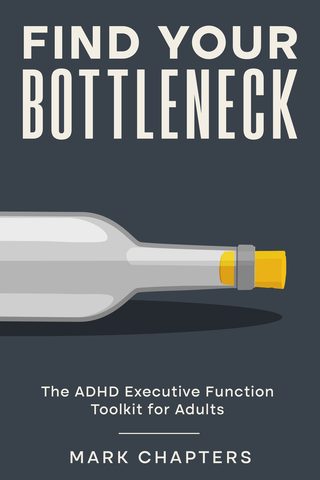
Find Your Bottleneck
5.08 ratings
When the orienting is done and the question becomes what to do on a Thursday.
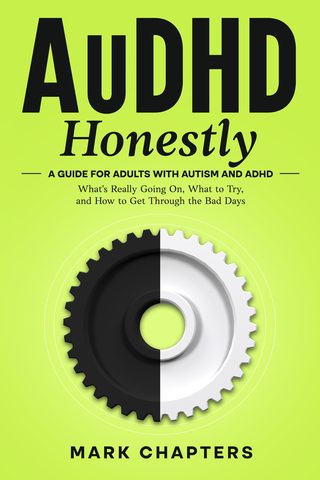
AuDHD, Honestly
New, November 2026
If chapter 13's other letters include autism. This one is for both at once.
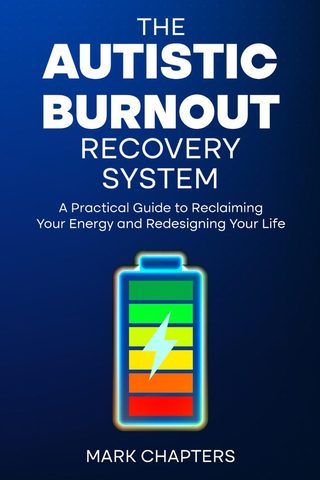
The Autistic Burnout Recovery System
4.458 ratings
The Curated Map's pick for when autism is also in the picture.
Which edition?
Find Your Bottleneck. Each link opens Amazon in your country.
Which edition?
AuDHD, Honestly. Each link opens Amazon in your country.
Which edition?
The Autistic Burnout Recovery System. Each link opens Amazon in your country.