Same Brain, New Map toolkit
Resources
Crisis lines, organisations, and the facts the book deliberately did not print because they were going to change.
Last checked 5 September 2026Reviewed annually
You don't have to be at a breaking point to call, and you don't have to have earned it.
- United States988 Suicide & Crisis Lifeline: call or text 988. Crisis Text Line: text HOME to 741741.
- United Kingdom and IrelandSamaritans: 116 123, free, any time. Shout: text SHOUT to 85258.
- AustraliaLifeline: 13 11 14. Beyond Blue: 1300 22 4636.
- Canada9-8-8 Suicide Crisis Helpline: call or text 988.
- GermanyTelefonSeelsorge: 0800 111 0 111 or 0800 111 0 222.
- Anywhere elsefindahelpline.com lists services by country.
If you are in immediate danger, contact emergency services: 911 (US, Canada), 999 (UK), 000 (Australia), 112 (much of Europe).
A note about the grief chapter
Chapter 11 describes a wave: heavy, recurring, and normal. Something different is worth naming plainly. If the weight isn't lifting at all — weeks of flat, or you've stopped doing things you normally do, or the thoughts have gone somewhere darker than mourning — that's a reason to talk to a doctor or therapist, not a bigger version of the same chapter.
One practical note from the research: post-diagnostic support is patchy almost everywhere and is frequently not offered. You may have to ask for it directly rather than waiting to be handed it. Asking is not an imposition; it's the normal way this works.
ADHD organisations
- United StatesCHADD (chadd.org)ADDA, the Attention Deficit Disorder Association (add.org)
- United KingdomADHD UK (adhduk.co.uk)The ADHD Foundation (adhdfoundation.org.uk)
- Northern IrelandADD-NI, which is the main source of current signposting for HSC trust areas
- IrelandADHD Ireland (adhdireland.ie)
- AustraliaADHD Australia (adhdaustralia.org.au)AADPA, the Australian ADHD Professionals Association
- CanadaCADDAC (caddac.ca)CADDRA, the Canadian ADHD Resource Alliance
- GermanyADHS Deutschland e.V.
Current status items
These are the facts the book deliberately didn't print because they were going to change. This is where they get updated.
US adult ADHD guidelines
Status as of 5 September 2026: still unpublished. The American Professional Society of ADHD and Related Disorders has been developing the first US clinical guidelines for adult ADHD since 2022. They entered Stage 3 — final review before publication — in an announcement dated the week of 24 August 2026.
Chapter 5 tells readers that the United States has never had a national clinical guideline for adult ADHD, and sends them here for the live position. When these publish, update this section and link the guidelines directly. Adult guidance has existed for years in Canada, the UK, Europe, and Australia.
Assessment routes and waits
These live on the Assessment Pathways page, which is reviewed quarterly.
Screening questionnaires
The ASRS — the Adult ADHD Self-Report Scale, developed by the World Health Organization with researchers at Harvard — is free and widely used. Its first six questions are the validated screening part.
What it does: flags whether a full evaluation is worth pursuing.
What it can't do: diagnose you, assess impairment, establish childhood onset, or rule out the alternatives. High stress, poor sleep, anxiety and substance use all push scores up.
And the asymmetry that protects you: it's highly specific but only moderately sensitive, so a positive result is meaningful while a negative one misses roughly one case in three. If you screen negative and your life is still visibly costing you more than it should, that is not an answer and it does not close the question.
Nothing on this page is medical advice. If something here is out of date or wrong, that's worth telling us about — this page exists precisely because these things change.
Where to go next
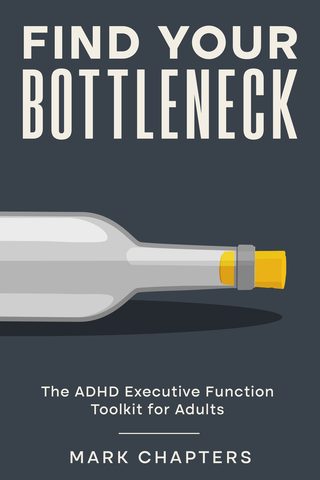
Find Your Bottleneck
5.08 ratings
When the orienting is done and the question becomes what to do on a Thursday.
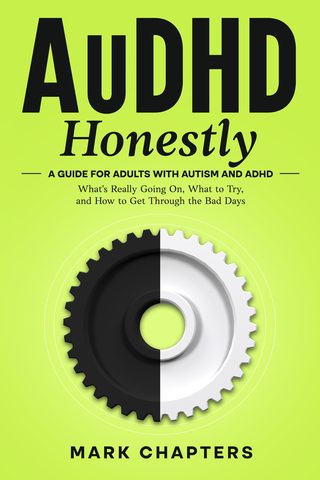
AuDHD, Honestly
New, November 2026
If chapter 13's other letters include autism. This one is for both at once.
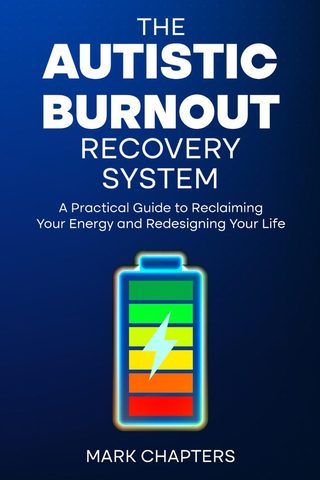
The Autistic Burnout Recovery System
4.458 ratings
The Curated Map's pick for when autism is also in the picture.
Which edition?
Find Your Bottleneck. Each link opens Amazon in your country.
Which edition?
AuDHD, Honestly. Each link opens Amazon in your country.
Which edition?
The Autistic Burnout Recovery System. Each link opens Amazon in your country.